Leah Swann
  • home
  • Sheerwater
  • the ragnor trilogy
    • what readers say
    • teaching notes for Irina The Wolf Queen
  • bearings
    • reviews
    • interviews
    • teaching notes
    • VATE article
  • stories
  • Blog
  • writing services
  • contact
  • Extract from Sheerwater
  • home
  • Sheerwater
  • the ragnor trilogy
    • what readers say
    • teaching notes for Irina The Wolf Queen
  • bearings
    • reviews
    • interviews
    • teaching notes
    • VATE article
  • stories
  • Blog
  • writing services
  • contact
  • Extract from Sheerwater
Search by typing & pressing enter

YOUR CART

11/21/2015 1 Comment

On Dragons....

Picture

Dragons -- cliché or archetype?

 ​
When I was writing The Ragnor Trilogy, a dragon appeared in the story. I was not so much inventing -- the inventiveness comes later -- as transcribing the story I was seeing in my mind, a version of a bed time story I'd told my children. I never intended to write about a dragon... But there he was, the Venerated Dragon of the Narrowlands.

 For the first two books, Irina The Wolf Queen and Irina and The White Wolf, no-one sees this Dragon.  When I was writing the third volume it became clear that Irina would have to confront him... she is chained to a rock in his lair, and it’s a terrifying moment. But I did wonder, why am I writing about a dragon? Have dragons been reduced to clichés through overuse?

I kept writing, thinking that perhaps I'd replace the dragon with some  monster of my own devising later; but when I was editing, I found that 
 nothing else could stand in for the Venerated Dragon. He was astonishing to me, he was real. Part of his reality was his deep falseness, his layers of lies. This made him a worthy foe for Irina, who has taken on 'the Junsong', Ragnor's creed of truth, as her own personal creed. 

According to the late myth expert, Joseph Campbell, dragons are part of “the agony of spiritual growth.”  The hero must cross threshold after threshold , conquering dragon after dragon, until “the stature of the divinity that he summons to his highest wish increases, until it subsumes the cosmos. Finally, the mind breaks the bounding sphere of the cosmos to a realization transcending all experiences of form ...”

A cliché is something that’s become hackneyed or trite. There’s nothing trite about a dragon. Children understand dragons; they know intuitively what they represent, and they have their own private dragons, real or imagined. This is the dragon’s archetypal power, and it transcends cliché. It’s good, even essential,  to read that dragons can be slain. Storytelling shows us how we can become more truly our best selves.  


Competition Closing Soon! Win this cover art canvas!

1/ Who was in the painting that Vilmos brings to show Queen Chloe?

2/ What is the name of Vilmos's rat?

3/On Ragnor, is the realm of Pavel in the North, South, East or West?

4/Where do Prince Andor and King Niklas get trapped?

5/ What is the 'lost book' that outlines the creed of Ragnor?
Picture
Submit your answers by Friday November 27 to my contact form to go in the running to win the cover art for Irina and the White wolf, printed on canvas.  Click here
​
1 Comment

11/19/2015 0 Comments

Sienna's book report

Click to set custom HTML

When I read Sienna's book report on Irina The Wolf Queen (and saw her wonderful drawing) I was astonished -- she has...

Posted by Leah Swann - Writer on Tuesday, November 17, 2015
0 Comments

11/15/2015

Image versus Imagination. 

Does a book's cover steal from us?

Picture
Back in 1977, in the dark ages before the internet and Facebook, Susan Sontag wrote in  her long essay "On Photography" that we live in an 'image choked world'. (I wonder what she'd say now, when our appetite for images seems insatiable?) 

Do images steal from our imagination? Or do they inspire? When I was writing Irina The Wolf Queen, I described the appearance of some characters, but omitted details about Irina, and her friend, Prince Andor. My hope was that young readers would imagine them how they wanted; even project themselves into those characters. 

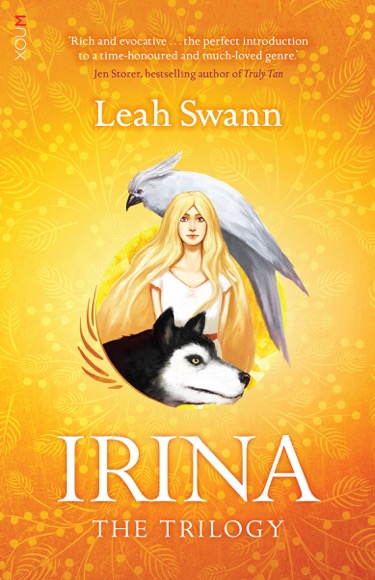
And then, there came the book cover. Decisions had to be made. The designer drew Irina blonde, and the image was attractive and eyecatching enough, we hoped, for readers to choose it from the bookstore shelf. Commercial imperatives intruded on the pure innocence of imagining.

I still wonder whether it is possible to imagine Irina in some other way, or whether the cover has made that impossible? What do you think?


​

Comments (from Facebook discussion page, Leah Swann - Writer.)


​Sharon Thompson: Stunning image. Yes, the competitive nature of the market place and the paucity of time (few long, leisurely, loiterings browsing in book shops today) demand work be represented visually and appeal instantly. Gosh, was there really a time before the internet???


Lachie Swann: Images steal from our imagination in the same way that in-articulation prevents us from shaping reality.

View 1 more reply

Leah Swann: Yes, both rob us of the chance to bring out something, however small, that is unique.

Joanne Kyrkilis: Unfortunately I think the image sticks. While I understand the commercial imperative...it does impose on our ability to imagine our own Irina and identify with her.


Anne Hadley: I think when we read no matter the cover our own imagination takes over The cover at first glance maybe important but as I read I confess I shape my own visions.


Leah Swann:  Yes, I'm the same, but I find if I've seen the film of a book the actor tends take over from my imagined character.

11/4/2015 0 Comments

Watch the book trailer for Irina: The Trilogy!

Irina: the Trilogy  is now available in print and as an ebook (perfect Christmas gift for 8-13 year olds!)
​Watch the book trailer:  here 
Picture
0 Comments

10/15/2015 4 Comments

A competition for Irina fans, and an interview with Ben Okri.

Competition for Ragnor Fans!
Closes Friday November 27, 2015

Picture
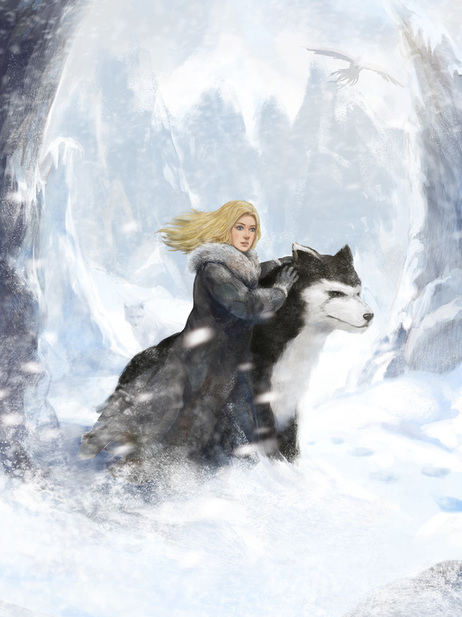
This beautiful canvas poster has Roy Chen's cover art for Irina and The White Wolf, the second adventure in The Ragnor Trilogy. To be in the running to win, answer the questions below, and submit them to the contact form. 

(Clue: all the questions come from the first adventure, Irina The Wolf Queen)

Quiz Questions to win this art canvas:

​1/ Who was in the painting that Vilmos brings to show Queen Chloe?

2/ What is the name of Vilmos's rat?

3/On Ragnor, is the realm of Pavel in the North, South, East or West?

4/Where do Prince Andor and King Niklas get trapped?

5/ What is the 'lost book' that outlines the creed of Ragnor?

Submit your answers by Friday, November 27 here: Quiz Answers 

Good luck!

Unfold your own myth....

​Recently, I came across this lovely quote from Rumi:

“Don't be satisfied with stories, how things have gone with others. Unfold your own myth.”

I love the word 'unfold';  that we each have a myth curled up within us, complete with our own symbols, motifs and ideas. (I also like that 'unfold' is almost a command -- this is part of our essential work.) 

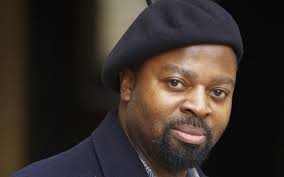
One individual who has unfolded his own myth is the London/Nigerian writer, and Booker Prize winner, Ben Okri. Read a short interview with him below. 
​

Three Questions with Ben Okri

Picture
​Ben Okri won the Booker Prize in 1991 for The Famished Road. He has published ten novels, three volumes of short stories, two books of essays, and three collections of poems. His work has been translated into more than 26 languages. He has been awarded the OBE, numerous international prizes and honorary doctorates. Born in Nigeria, he lives in London, and was kind enough to be interviewed when he visited Australia earlier this year. His latest novel, The Age of Magic, is a stunning, profoundly considered work of fiction.
​


1/  Much of your work has a quality of dreaminess, and yet you have no problem sustaining a narrative. What would you say to writers about the craft of telling a story?

“That what was what I learned first, fortunately. In my first novel, Flowers and Shadows, which I wrote when I was seventeen or eighteen, I had masters such as Maupassant, Ibsen, Chekhov. I had to teach myself formal storytelling. I went from classical to experimental, and now to classical experimental.

“It’s very important that anyone who wants to write should you learn to do that first, because it is much harder to do it later on if you’ve acquired some bad habits of experimentation or innovation. Storytelling should, as the writer’s career advances, become an instinct. It’s not something you can graft back on. I always want to tell young novelists,  leave out all the clever stuff and fancy ideas, and learn the humility of telling a story first.”
 

2/ Where do novels like Starbook, The Age of Magic and Astonishing the Gods come from?


“Astonishing the Gods was a haunting idea that I had from when I was a kid in Nigeria. I carried it with me through all the books I was writing, The Famished Road and all that, and then one day in the summer I just started it. It just turned up. But then a tremendous amount of work goes into getting it right.
           It’s not that ‘anything goes’ in my writing, but I have a logic in each of my books which I follow and I let it lift to its natural place. I follow the logic of each work rigorously, and I follow it in every sentence of that work. So there’s great rigor, but there’s great freedom at the same time. It’s a very strange combination.”

3/What’s your advice for writers and artists?

​

“It’s all here. It’s all in the quality of looking. A simple kind of story in the hands of a popular thriller writer is one kind of story. That same simple story in the hands of a master becomes a gateway to a greater understanding of the human condition. It’s not the thing itself. It’s the mind that looks. It’s the mind that sees. That’s what I mean by it’s all here.”
4 Comments

6/27/2015 14 Comments

That Inward Eye

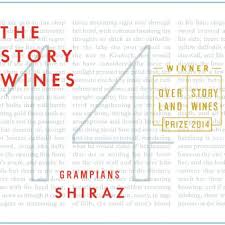
Here's the one sentence story that appears on the 2014 Story Wine label, called "That Inward Eye" after a famous line in Wordworth's poem ...

Picture


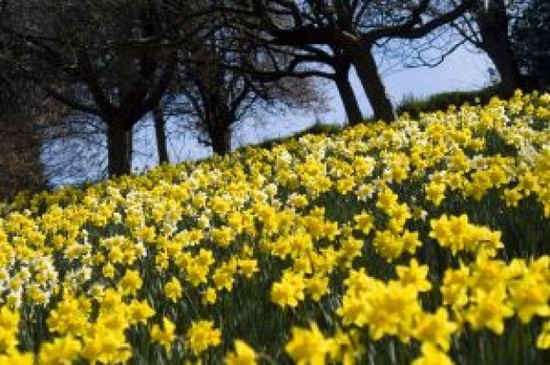
On the bus she’s pressed next to a man with the same grey hair as her father, and he’s reading the news while the rain falls outside the windows on the new blossoms, and she thinks how glad she is of the fact of spring because it reminds her of when she was four, when they still lived in York and she saw the daffodils stretching all the way to the city wall, the wall that looked like a castle wall, the wild gold daffodils so thick, shouting the joy of her childhood from their frilled trumpets, before she emigrated and became this tight person on the bus, with no ambition despite the money her father spent on her education – all that money, where’s your ambition – and she turns the word ambition over in her mind and can’t connect it with herself, she just has to stay on this bus until she gets to the shop because she didn’t go to university which her father says she will regret – another word she has no use for – though she does wonder what she would do if she didn’t have to work in the shop and all she can think of is the daffodil bulbs she’d plant, digging holes to the horizon, the shorn earth cool enough to host thousands of bulbs that will hatch into a brimming gold forest such as no-one, certainly not the passenger beside her, has dreamt of, though he no doubt houses daffodil lore from childhood, songs like daffy down dilly or the opening line from Wordsworth’s poem, and maybe he likes daffodils but there is no way he could love them as she does, this grey man with his head bent, studying the news as though it could contain thoughts as interesting as those streaming right now through her head, with commas breaking the thoughts as thick as the daffodils by the lake the poet passed on the way to Keswick, nor would he have considered the force of sunlight pressed into petal flesh, the pressure needed to make those rich ochres and yellows, and the straight upright quality, the sturdiness, the vivid strengthening joy the soul can eat from, though she is making assumptions and doesn’t know the first thing about him and never will, and she smiles to herself, wondering what he would make of her fantasy that she is waiting for her lover on the city wall and she sees him returning from war in the distance – no, she revises this, recasting herself as the male soldier returning from battle, war-torn, weary, in rags of filth, the smell of men’s blood in his hair, clogs heavy on his feet, sword crusted and hanging from his side, heart leaping at the clear yellow daffodils sweeping up to the city wall, and life seems worth living despite the lives he’s taken, and he shears off a few yellow heads not from spite but to enjoy the resistless gentleness of vegetation against the blade rather than gristle and bone and the burst and drip and rip of death, and all that matters is the integrity of this purest of yellows, and the subterranean mother hatching it out, and knowing the same procreative power waits in his lover on the city wall, he’ll husband her, and she looks around the bus, content that ambition would not teach her these inward valleys of knowing, and if asked what she was thinking, there wouldn’t be a single person on the bus who could guess.

Picture
Picture
14 Comments

5/25/2015 0 Comments

Like wine? Like literature? Come along....

Picture


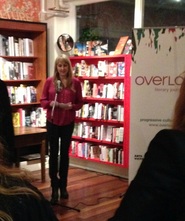
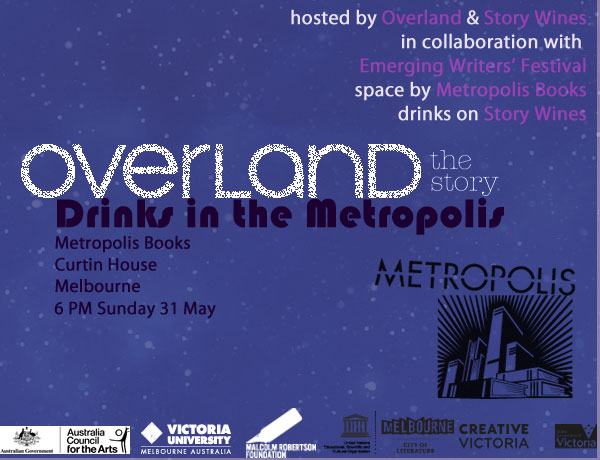
To launch the 2015 Story Wine Prize competition, Overland and Story Wines, in collaboration with the Emerging Writers' Festival, is hosting book party. The venue, Curtin House’s Metropolis art bookstore, an old Communist headquarters, will add a vintage vibe.

Story Wine will launch and serve (for free) its new vintage shiraz which will have the 2014 prize-winner, Leah Swann's story published on its label. Starts at 6pm.
0 Comments

5/13/2015 1 Comment

A quote from Borges...
Picture
"What does being a writer mean to me? It means simply being true to my imagination. When I write something, I think of it not as being factually true (mere fact is a web of circumstances and accidents), but as being true to something deeper. When I write a story, I write it because somehow I believe in it -- not as one believes in mere history, but rather as one believes in a dream or in an idea."   Jorge Luis Borges, This Craft of Verse.


In a creative writing exercise on a school visit, a student was stunningly true to his imagination. He told me the most precious thing he could imagine was:
 
"the stone of souls: to look at it is like looking at pure sunlight, to touch it sends a shiver down your spine."


1 Comment

4/14/2015 0 Comments

A Mother's Day Offer from Inkerman and Blunt.


  Destiny, heat and lust, cold betrayal, unrequited. It's all here...

Picture
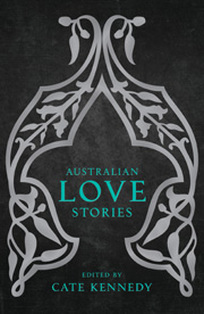
Inkerman and Blunt are offering a 10% discount (and free postage) if you buy  Australian Love Stories from their website before April 30.
http://inkermanandblunt.com/home/projects/australian-love-stories/
Picture
See, it’s great, serious, considered, wild and heady stuff.--Dave Graney, The Adelaide Review

Every so often, a book captures a reader’s imagination and takes on the quality of a stolen moment. Australian Love Stories is one of those gems, allowing readers the secret pleasure of a story at a time.—Amanda Ellis, The West Australian.

Destiny, heat and lust, cold betrayal, unrequited. It’s all here.
—Kerenlee Thompson, Kerenlee Thompson.com


Vintage Mother's Day Card:  http://wordplay.hubpages.com/hub/Free-Printable-Mothers-Day-Cards#slide871182

0 Comments

3/23/2015 1 Comment

Precious Things...
Picture
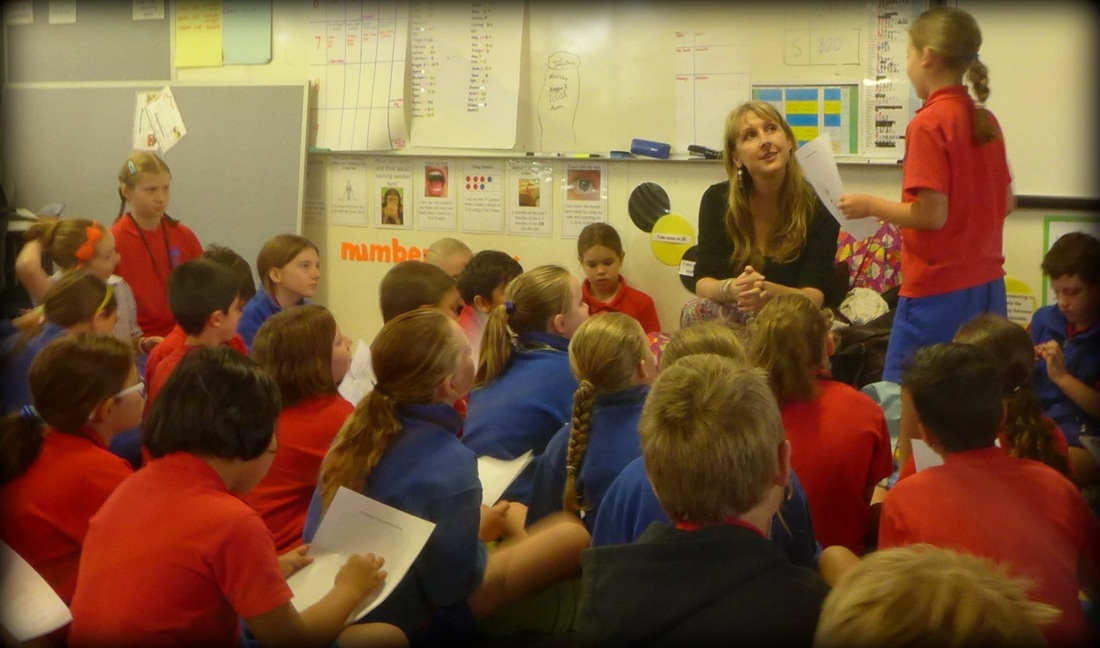
After almost two hours driving through peak hour traffic in the rain, I pulled up at a bakery in Port Melbourne for directions.
   "You mean Graham Street," said the barista, hot coffee roaring into a paper cup. He nodded at the customer beside me. "That's where we went. They  call it Port Melbourne Primary now." And rolled his eyes.
    "Yeah, we all went there. Just drive down the overpass. You can't miss it."
The customer stepped out into the rain with me, a stranger in his land, to point the way. Pleased to be asked. 
       
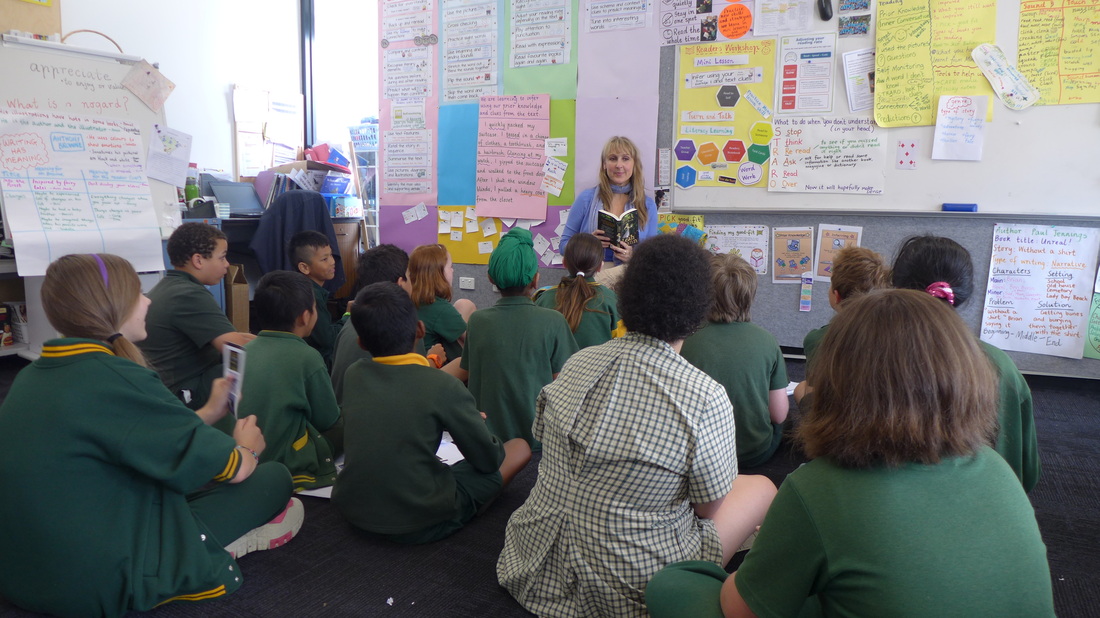
Schools are such alive places. After two days, meeting around one hundred students, I was astonished at their attention, and their creativity. We talked about writing and inspiration, and what is most precious to us. One boy tried to tell me his most precious thing was a zombie.
         "An imagined zombie," he laughed, delighting in my (feigned) horror.
         "Surely the best kind," I replied.
Another boy told me he'd like a "golden hoverboard."  A beautiful girl showed me a drawing of her most precious thing, her mother, and my heart went out to her. I kept thinking about everyone long after I'd left that Friday, and was happy when a student called Willow wrote  to say she'd read Irina the Wolf Queen 'all day and all night' and loved how it was dreamy and mysterious.

(You can read WIllow's comments under 'what readers say.')

My thanks go to the warm and friendly teachers at Port Melbourne Primary, and to the librarian, Margaret Whitford, who facilitated the visit.


1 Comment
<<Previous
Forward>>
    Picture

    Author

    Notes about writing, books, arts,  ideas and events.

    Archives

    December 2025
    December 2020
    May 2020
    November 2019
    April 2019
    May 2017
    October 2016
    May 2016
    February 2016
    December 2015
    November 2015
    October 2015
    June 2015
    May 2015
    April 2015
    March 2015
    December 2014
    October 2014
    September 2014
    August 2014

    Categories

    All

    RSS Feed